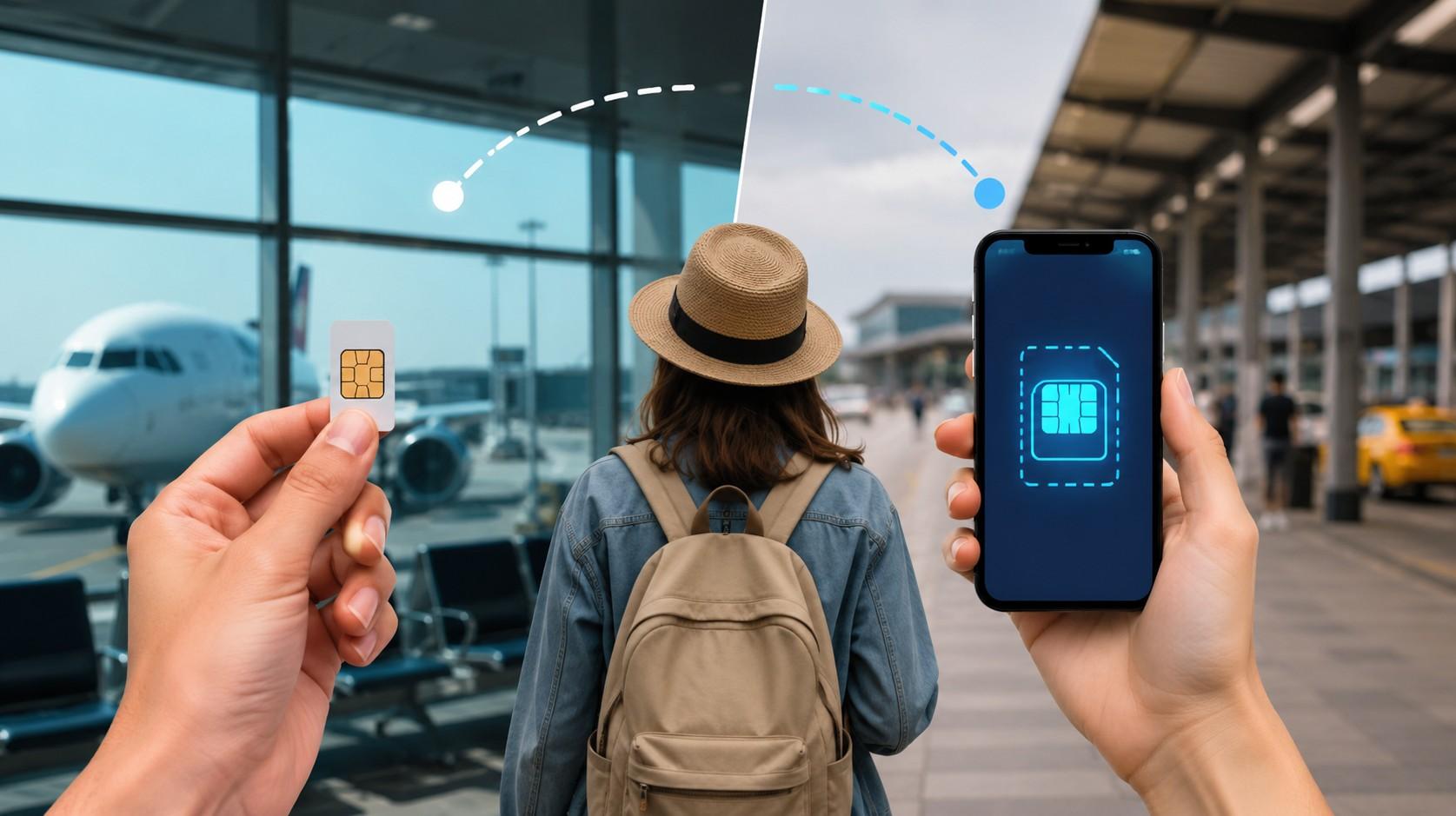
Business Travel eSIM for the USA: Expensing, Multi-Trip and Team Plans
A business travel eSIM is a prepaid data profile bought per trip, delivered as its own invoice, and expensed as a line item rather than buried inside somebody’s personal phone bill. That single difference solves the problem finance teams complain about most: roaming charges arrive four to six weeks after the trip, mixed with personal usage, on a statement the traveler is reluctant to hand over.
Cost is the second argument. Daily roaming passes for the United States run around £6 to £8 from the UK, CAD $13 to $16 from Canada, and comparable rates elsewhere, applied per line per day. A five day Chicago trip for a team of four reaches several hundred dollars before anyone opens a laptop. Vesim US plans start at $0.60 across 220+ destinations.
Business travel also has requirements leisure travel does not. Multi-factor authentication tied to a work number. Hotspot capacity for a laptop in a hotel room with throttled Wi-Fi. Video calls back to head office from a convention centre. Repeat trips that make per-trip purchasing tedious. Data residency questions from a security team that wants to know which network the traffic crossed.
This guide covers the expensing mechanics, what changes for frequent flyers on regional and global profiles, how to buy and distribute profiles across a team, the security position, keeping a work number live for Okta or Duo prompts, data sizing for Zoom and Teams, and coverage in the cities where American conferences actually happen. Thirteen questions close it out.
Why roaming bills are hard to expense
Expensing roaming fails on four mechanics, and every finance team recognises at least two of them.
Timing. Charges appear on the next billing cycle, which arrives after the expense report deadline. Travelers either estimate or file late.
Mixing. A personal phone bill contains personal calls, family data and a partner’s line. Handing it to finance exposes information the employee reasonably wants private, so claims get submitted as round numbers instead.
Attribution. A daily roaming fee does not say which day belonged to which client or cost centre. Multi-city trips become guesswork.
Unpredictability. Out-of-bundle rates on some tariffs run above $2 per megabyte, which means a background sync can turn a $60 estimate into a $400 claim. Finance cannot budget against that.
Corporate mobile accounts solve some of this, but only for companies large enough to run one, and they still bill in arrears.
Prepaid changes all four at once.
What a prepaid plan gives finance
Finance gets a clean artifact. One purchase, one receipt, one date, one amount, issued at the point of sale rather than a month later.
Four practical advantages follow:
Pre-trip purchasing puts the cost in the same reporting period as the travel booking
Per-trip invoices attribute cleanly to a client, project or cost centre
Fixed amounts mean no variance between the estimate and the claim
No personal data appears on the document, so employees file it without hesitation
Card handling matters too. A company card can buy profiles directly, which removes reimbursement entirely, and most providers issue a VAT or GST compatible receipt depending on the billing entity.
One caution worth stating. Prepaid receipts are digital and easy to lose in an inbox, so forward the confirmation to your expense tool the day you buy rather than the week you file.
Repeat travelers need a different structure again.
Multi-trip travelers and regional profiles
Frequent flyers hit the friction point fast. Buying a single-country profile before every trip means a purchase, an install and a slot consumed, four or five times a quarter.
Two formats fix it.
Regional plans cover North America under one profile, switching host network automatically between the United States, Canada and Mexico. Anyone running a Toronto, Chicago, Monterrey circuit stops buying three plans.
Global plans span dozens of markets with a single allowance, which suits sales and delivery roles crossing continents. Our guide to long-term global plans compares the formats in detail.
Top-ups extend an existing profile rather than requiring reinstallation, so the slot on your handset stays allocated to one working plan across several trips. That also keeps the expense trail simple: one profile, several dated top-up receipts.
Teams need a third approach.
Buying and distributing profiles for a team
Team purchasing works because eSIM profiles are digital goods. A travel manager can buy several plans in one transaction and forward each activation code to the relevant traveler by email.
Three distribution patterns work in practice:
Central purchase, individual install. The office buys, each traveler scans their own code. One invoice, clean attribution.
Traveler purchase, company card. Each person buys their own on the corporate card, which suits ad hoc travel.
One large plan, shared by hotspot. Suitable when a team moves together, for example a site visit or a trade show booth crew.
The third option deserves a caveat. Tethering drains the host device’s battery quickly and ties the group to one person’s movements, so it works for a stand at CES and badly for a team splitting across client meetings.
Each activation code installs once, on one device, so codes cannot be recycled between staff. Allocate them by name at the point of sending, and keep a simple record of which code went where.
Security teams usually ask the next question before approving any of this.
Security and compliance
Profiles install into a tamper-resistant secure element over a signed, encrypted channel from an SM-DP+ server, which is the same mechanism your corporate carrier uses to provision a line. Data-only profiles issue no phone number, so there is nothing to port and no SIM swap surface.
Three points usually satisfy an information security review:
Traffic encryption is applied at the radio layer and again by TLS on virtually all corporate applications
Corporate VPN clients run over an eSIM connection exactly as they do over any cellular data link
Device management policies including Intune and Jamf apply normally, since the profile does not change the handset’s managed state
One genuine consideration: US networks fall under American legal process for connection records, which applies equally to roaming, prepaid SIMs and eSIMs. The full picture sits in our guide to eSIM safety and data privacy in the USA.
Authentication is the operational detail people forget.
Keeping your work number live for MFA
Multi-factor authentication is where business trips break. Okta, Duo, Microsoft Authenticator and most corporate SSO systems fall back to SMS when a push notification fails, and that SMS goes to your work number.
The arrangement is straightforward:
Keep the work line enabled for calls and texts, with data roaming switched off
Confirm international roaming is active on the corporate account before departure
Set the US profile as the line for mobile data
Test an authentication prompt on landing, before you need one in a client meeting
Push-based authentication runs over data, so it works fine on the travel profile. It is the SMS fallback that needs the home line alive. Our guide to receiving SMS on a travel eSIM covers the settings.
Corporate accounts sometimes disable international roaming by default as a cost control, which blocks the SMS fallback entirely. Ask IT to enable it for voice and text while keeping data off.
Data sizing for a business trip
Business consumption skews higher than leisure because of video calls and laptop tethering.
Zoom or Teams video consumes roughly 540MB to 1.6GB per hour depending on resolution and participant count
Voice-only calls consume about 30MB to 60MB per hour
Email with attachments consumes about 150MB across a busy day
Laptop tethering for browsing and document work consumes roughly 300MB per hour
Cloud file sync can consume several gigabytes without warning if left enabled
A three to five day trip with two hours of daily video calls and moderate tethering lands around 10GB to 15GB. Pause cloud sync before you travel, or size up accordingly.
Convention cities add load. Trade show halls run tens of thousands of devices on the same cell sites, which degrades speed even where coverage is strong. Downloading decks and documents before entering the venue avoids the worst of it.
Coverage in US conference cities
Host networks decide performance, and there are three. Verizon covers rural and highway routes best, useful for site visits outside metro areas. AT&T delivers consistent nationwide reach. T-Mobile leads on urban mid-band 5G speed across Manhattan, Chicago and San Francisco.
City-level notes worth knowing: Las Vegas convention traffic saturates the Strip during CES and large trade shows, which our Las Vegas guide covers. New York’s subway commute has its own coverage map, explained in our New York City guide. And Los Angeles meetings usually involve freeway driving with live navigation, covered in our Los Angeles guide.
Buy and install over office or home Wi-Fi before departure, since no identification is required at any stage. Plan sizes sit on the US eSIM page.
Writing it into a travel policy
Policy language keeps this consistent across a company, and three clauses cover most of it.
Default position. State that travelers buy a prepaid data plan before departure and keep data roaming disabled on the corporate line. That single sentence removes most of the variance from the mobile line of the travel budget.
Exception. Name the cases where roaming is acceptable: trips under 48 hours, handsets without eSIM support, and roles that must answer native voice calls on a work number.
Purchasing route. Say who buys and on which card. Central purchasing suits scheduled travel, while a company card in the traveler’s hands suits short-notice trips.
Add one operational line about international roaming staying enabled for voice and text on corporate accounts, since blocking it entirely breaks SMS-based authentication.
Setting up before departure
Confirm eSIM support by dialling *#06# and checking for an EID beside the IMEI
Verify the handset is unlocked, which corporate devices usually are
Ask IT to enable roaming for voice and text while leaving data off
Buy a plan sized to the trip and forward the receipt to your expense tool
Install the profile over office Wi-Fi and label it clearly
Pause cloud file sync so it does not consume the allowance on day one
Can I expense a travel eSIM as a business cost?
Yes. A prepaid plan produces a single dated invoice at the point of purchase, which most finance teams accept more readily than a personal phone bill containing mixed usage. Buying on a company card removes reimbursement entirely.
Does a US eSIM work with corporate VPN?
Yes. A VPN client runs over an eSIM connection exactly as it does over any cellular link, because the profile changes the network path rather than the handset’s software stack. Split tunnelling and always-on policies behave normally.
Will my Okta or Duo codes still arrive while abroad?
Push notifications arrive over the travel data plan, and SMS fallback arrives on your work number provided international roaming is enabled for voice and text. Corporate accounts sometimes disable roaming by default, so confirm with IT before departure.
How much data does a business trip to the USA need?
Plan for 10GB to 15GB across three to five days with daily video calls and laptop tethering. An hour of Teams or Zoom video consumes roughly 540MB to 1.6GB depending on resolution.
Can one person buy eSIMs for a whole team?
Yes. Profiles are digital goods delivered by email, so a travel manager can purchase several in one transaction and forward each activation code to the relevant traveler. Each code installs once, on one device.
Is tethering allowed on a travel eSIM?
Tethering works on plans that explicitly permit it, and most travel plans do. It suits a team moving together, though it drains the host device’s battery and ties everyone to one person’s location.
Does a US eSIM give me an American phone number?
Most travel plans are data-only and issue no number, which is what keeps registration light. Calls run through Teams, Zoom or WhatsApp, and your work number stays reachable on its own profile.
What is the cheapest option for someone flying to the USA monthly?
Frequent travelers usually land on a regional or global profile with top-ups, which avoids repurchasing per trip and keeps one slot allocated. A corporate roaming bundle can compete if the company negotiates volume rates.
Do travel eSIMs work with mobile device management?
Yes. Intune, Jamf and comparable platforms manage the handset rather than the carrier profile, so an installed eSIM does not alter compliance status. Policies restricting personal hotspot still apply as configured.
How do I prove the expense if the receipt is just an email?
Forward the purchase confirmation to your expense tool on the day you buy, since it carries the date, amount and merchant. Most providers also keep order history in an account dashboard for later download.
Can I claim VAT or GST on a travel eSIM?
That depends on your billing entity and jurisdiction, so check the tax details on the issued invoice and confirm with your finance team. Providers issuing from a registered entity will show the applicable tax on the receipt.
Which US network is best for a trade show?
None performs well in a saturated convention hall, because tens of thousands of devices share the same cell sites. T-Mobile generally holds up best in dense urban settings, and downloading materials before entering the venue matters more than network choice.
What happens to unused data after the trip?
Unused allowance expires with the validity window rather than carrying forward, so size the plan to the trip rather than buying headroom you will lose. Top-ups are the cheaper way to handle an unexpectedly heavy week.
The short version
Business roaming fails on expensing before it fails on price: charges arrive after the report deadline, mixed with personal usage, unattributed to any cost centre, and unpredictable enough that nobody can budget them. A prepaid profile produces one dated invoice at purchase, attributes cleanly, and can be bought on a company card.
Frequent flyers move to regional or global profiles with top-ups rather than buying per trip. Teams buy centrally and distribute codes by email, one code per device. Security reviews clear easily because the profile provisions through the same signed channel a corporate carrier uses, and VPN and device management behave normally. Keep the work line enabled for SMS fallback on Okta or Duo, size the plan at 10GB to 15GB for a week of video calls and tethering, and pause cloud sync before you fly.
Compare US plans from $0.60 on the Vesim US eSIM page.